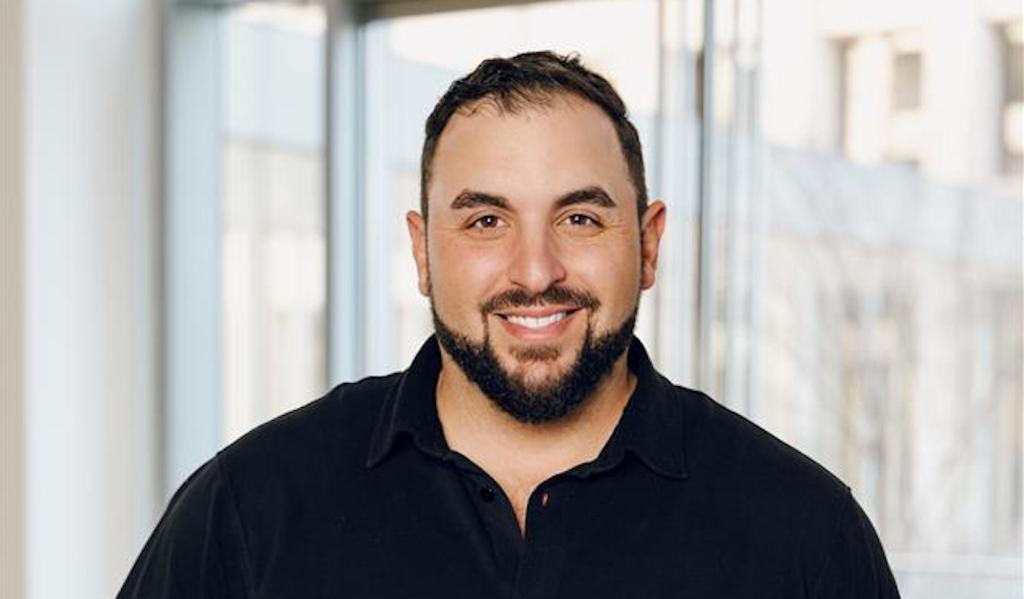
AI powering DIY investing: Webull CEO Anthony Denier on the rise of the trading co-pilot

How artificial intelligence is reshaping research, risk management, and execution for everyday investors.
AI is no longer a futuristic add-on in DIY investing. It’s becoming the operating system powering it.
As part of our monthly spotlight on AI in wealth, InvestmentNews asked Anthony Denier, CEO of Webull, for his view on how the technology is transforming the capabilities of self-directed investment platforms, to help advisors understand how this competitive part of the market is evolving.
Denier describes the acceleration and reshaping of how everyday investors research markets, interpret signals, and execute trades in an industry moving from self-directed navigation to guided, AI-assisted decision-making.
Just two years ago, retail investors largely built their own workflows. They hunted for data, interpreted it, selected instruments, placed trades, and managed risk manually. According to Denier, AI has collapsed that process into a single continuous loop.
“The biggest change is that the platform can translate data and intent into insight and an actionable plan in real time,” he explains. “You can ask a question in plain language, get context that is specific to the symbol and your position, and trade with risk and market context already framed. That shift moves decision-making from manual research and platform navigation to guided execution with guardrails and potential consequences made immediately visible.”
AI and the Globalization of Retail Investing
Retail trading has historically been limited by geography, time zones, and unfamiliar market conventions. Denier says AI is dissolving much of that friction.
“AI is making global participation feel continuous instead of segmented,” he says, explaining that Webull’s AI systems translate market conventions and overnight developments into a consistent user experience. “It helps users understand how a move in one region affects correlated assets elsewhere, so they can react without being experts in every venue.”
However, there are some things that cannot be overcome by technology alone, Denier acknowledges.
“The remaining barriers are structural. Market access, product availability, liquidity, tax treatment, and jurisdiction-specific restrictions still determine what a retail investor can trade and when. AI can explain, frame, and route, but it cannot eliminate regulatory and market-structure constraints,” he says.
Designing AI to Reduce Noise, Not Add to It
As AI unlocks massive real-time data streams, platforms face a risk of overwhelming users. Denier says the solution lies in disciplined information design.
“The balance comes through treating information as a staged system and consolidating output into one actionable response,” he says. “The default experience must be simple: one or two high-confidence signals, clear ‘why this matters,’ and a next best action.”
Depth is delivered only when needed, Denier notes: “AI should summarize first, then expand only when asked or when risk demands it. If the user is not holding the asset and has no intent to trade, they do not need institutional-grade detail. If they are in a leveraged position, they do. The platform’s job is not to overwhelm users with everything it knows. It is to show the minimum necessary information for them to make smarter decisions with no surprises.”
AI as Interpreter and Risk Guardian
For newer investors, global markets can feel chaotic. Denier describes AI’s role as both translator and risk guardian.
“AI acts as an interpreter and a safety layer,” he explains. “AI can translate macro headlines, central bank actions, earnings surprises, and volatility shifts into plain language, but it also needs to label uncertainty and separate facts from interpretation. The responsible use is to teach users what a signal typically affects, what time horizons it operates on, and what could invalidate it.”
Rather than predicting outcomes, AI should manage behavioral risk: “The goal is not to provide predictions for the user, but to prevent overconfidence and overcomplication.”
Where Human Judgment Still Matters Most
As automation increases, Denier sees a clear separation of responsibilities between machines and investors.
“The relationship becomes a division of labor. Algorithms handle detection, monitoring, and execution of mechanics. Humans retain intent, constraints, and accountability,” he says. “AI can surface setups, flag risk, and automate repetitive steps, but it should not replace the user’s choice, objectives, or risk tolerance.”
He says that transparency is essential: “The best systems will make the handoff explicit: ‘Here is what I see, here are the assumptions, here are the risks, here is the trade expressed as parameters.’ Then the human confirms. Platforms that do this well will preserve human override, transparency, and post-trade explainability.”
Building Compliance Into the Architecture
Operating across multiple jurisdictions requires careful regulatory design, especially when AI influences financial decisions.
“We treat compliance as product architecture, not a review step,” Denier explains. “AI needs jurisdiction-specific policies: what can be shown, what can be suggested, what disclosures are required, what records must be retained, and what supervisory controls apply. It means separating ‘education and explanation’ from ‘recommendation,’ and enforcing separation between the model outputs and the UI.”
Consistency across borders is difficult but achievable, he says: “The right approach is a single core system with modular rule layers per region, plus continuous monitoring, testing, and documentation so regulators can understand how the system behaves.”
The Rise of the Adaptive Trading Co-Pilot
Looking ahead three to five years, Denier envisions trading platforms evolving beyond tools into intelligent companions.
“The experience we are driving is closer to an adaptive trading co-pilot than an app full of tools. AI will be persistent, proactive, and portfolio-aware: it will explain what changed overnight, simulate outcomes, warn you when risk is creeping, and convert a goal into a structured plan across instruments,” he envisages. “Trading and education merge into one indistinguishable flow. Success will depend on discipline as much as innovation. The successful platforms will be those that combine three things: trust, execution quality, and restraint.”
As AI becomes embedded in every layer of retail investing, Denier’s message is that intelligence must be paired with responsibility, automation with transparency, and innovation with trust. The future of trading, in his view, is not just smarter, but more guided, more contextual, and ultimately more human in how it empowers choice.
This article is part of our Monthly Spotlight series, which in January focuses on AI in Wealth. Full coverage can be found here.
link