Student founders show off their ventures at the 2025 Skandalaris Launchpad Expo at Washington University in St. Louis. Photo by Rebecca Clark
If you want to understand the entrepreneurial ethos as defined by Olin Business School at Washington University in St. Louis, follow Block Club’s journey to market.
It started when Franklin Taylor, WashU Olin MBA 2024, noticed how many groceries he was wasting from taking advantage of the free food he was offered as a student. He thought dynamic pricing could persuade customers to buy what they’d actually eat, cutting food waste while also helping small grocers stay profitable and connected to their local customers..
He quickly learned that small stores just didn’t have the data to support such a platform. So, he pivoted.
He founded Block Club (formerly Zaiko), a platform connecting locals to neighborhood stores through curated offers. It helped grocers reach nearby customers most likely to become loyal regulars, all with zero upfront cost. As the idea gained traction, Taylor expanded to other small businesses in downtown St. Louis, partnering with apartment communities to drive traffic.
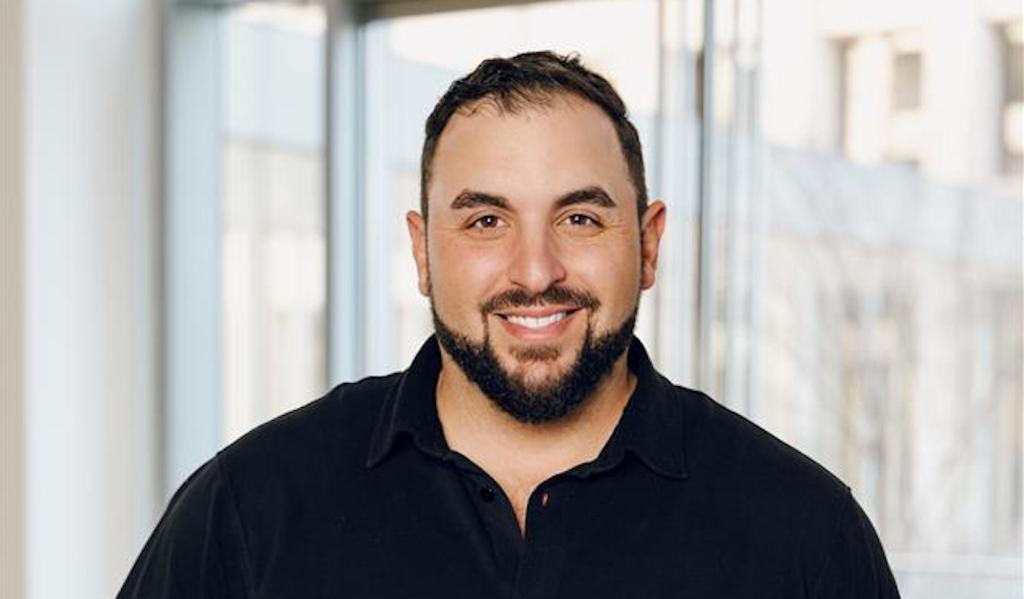
Franklin Taylor, MBA ’24
So far, the company has partnered with 23 apartments and hotels to connect 7,000 potential customers with more than 15 neighborhood businesses. The goal for the next year is to reach 100 buildings and 100 businesses, building a citywide platform for St. Louis residents to discover the hidden gems around the corner.
It can be argued that Block Club’s journey reflects the founders’ mindset of Washington University in St. Louis generally and Olin specifically: Learn by doing, build within a community, and look for ways to innovate – both in existing companies and in new ventures.
“One of my favorite things about Franklin is he’s pivoted his business a couple of times, which I think is a sign of a good entrepreneur,” says Doug Villhard, Olin’s academic director of entrepreneurship and an entrepreneurship professor in practice.
“If things aren’t working, he’s willing to change. That’s really what this entrepreneurial mindset is about.”
This mindset is just one factor helping WashU Olin’ rise to the top of our annual ranking of the World’s Best MBA Programs For Entrepreneurship year after year. 2026 is no different.
After slipping two spots to No. 3 last year – and ending a five-year streak at the very top – Olin has regained the crown our MBA entrepreneurship ranking for 2026.
Olin’s fulltime MBA program finished with a raw score of 69.1 (out of a possible 100), edging out last year’s winner, EDHEC Business School of France, which finished with a score of 62.6. Another European school, IE Business School in Spain, rose one spot to No. 3 with a score of 54.3.
Less than 3 points separated Nos. 4 to 6. Johnson Cornell Tech MBA rose an impressive 10 points this year to No. 4 with a score of 47.3. Spain’s Esade Business School was a close No. 5 with a score of 45.6 while University of Michigan Ross School of Business finished at No. 6 with 44.3.
Along with Cornell, two other schools had MBA programs rise into the top 10 after just missing the milestone last year: Rice University’s Jones School of Business rose five spots to No. 7 and Babson College rose three spots to No. 10.
Olin’s return to the top comes despite significant methodological changes we made to this year’s ranking. The result is a leaner ranking we think better measures entrepreneurial resources for full-time MBA students.
International business schools have climbed sharply in recent years, reflecting a growing global appetite for MBA programs that teach students to build and innovate, not just manage. The 2026 ranking features nine international schools (three in the top five) compared to six in 2025 (four in the top 10) and five in 2024.
This year’s list features three international MBA programs ranked by P&Q for the first time: Woxsen University in Hyderabad, India, debuted at No. 11, China Europe International Business School (CEIBS) debuted at No. 13, and Western University’s Ivey Business School in Ontario, Canada, finished at No. 26.
According to data provided for our 2026 ranking, Woxsen was propelled to the highest debut rank with strong showings in both percentage of MBAs starting a venture or joining a startup within three months of graduation, reporting 12.9% and 15.6% respectively.
At CEIBS, known for pairing every MBA student with a senior alumni executive mentor, 72% of its MBAs participate in an entrepreneurship club – the second highest percentage for the metric.
And Ivey’s one-year MBA program finished in the top 10 for the percent of its MBA class (84%) taking an elective focused entirely on entrepreneurship.
You can see how each school ranked in our 10 individual metrics in our data dump story here.
For 2026, Poets&Quants made significant changes to our ranking methodology. We evaluated each question and metric to create a more streamlined methodology that, we think, drills down on what matters most: Are students starting companies? Are they engaging with mentors or joining startups after graduation? Are schools providing the ecosystem and support to turn ideas into ventures?
We reduced the number of metrics from 16 to 10 while changing the weights for several of the metrics we kept. You can compare last year’s metrics and weights with this year’s in our full methodology story here.
While these changes have led to some ranking swings among schools from last year’s list, we hope it is a stronger representation of the entrepreneurship resources and networks available to MBAs.
P&Q previously ranked about 10 schools that did not submit data directly to us. We collected what we could from public websites and other reporting, but these schools were given no points where no reliable data could be found.
That led to rankings where entrepreneurship powerhouses like Stanford University’s Graduate School of Business ranked in the teens and Harvard Business School struggled to crack the top 10. For the last two years, we only rank schools that submit their data to us through our institutional survey. While we continue to invite the startup powerhouses, they have so far declined to fill our data survey.
These are generally the large, prestigious programs in the M7 who have a lot of entrepreneurship resources – and a lot of students. Certainly, if you have the background, stats, and personal story to get into Stanford, you’re going to have access to one of the best entrepreneurial ecosystems in the world. It’s why Stanford GBS consistently has the most MBAs on our annual list of the top funded MBA startups.
You’re also going to be among hundreds of other superstars all vying for the same attention.
Our methodology is designed to measure how resources are allocated to individual students. We use percentages and ratios – based on the number of full-time MBA graduates from a given year – to get a sense of what entrepreneurial resources and experiences are like on a per-MBA basis. This tends to favor schools with smaller class sizes where an entrepreneurial dollar or a mentor’s time is more concentrated.
The 32 schools on this ranking are entrepreneurial gems, even as their MBA programs may not typically get as much ink as the most prestigious.
NEXT PAGE:WashU Olin’s winning formula
MBA student Daylan Skidmore displays a wallet prototype he created during a design-thinking exercise in Professor Doug Villhard’s Fall 2025 Introduction to Entrepreneurship course.
Olin’s program is experiential by design. It doesn’t just teach students how to start companies – though it has plenty of courses and mentors that do just that – but to think like founders no matter where their career takes them.
“The education at Olin is like a ‘build your own adventure.’ If you bring your venture into class and apply the lessons directly, you’ll be in a strong position after graduation,” says Taylor, founder and CEO of Block Club.
“It’s not easy, but I’m grateful for a foundation built by great professors and mentors at WashU.”
If you need an example, just follow Taylor’s own founder journey. In Olin’s famed Hatchery course – one of the first business planning courses in the country – he gained the confidence to pitch his idea with the problem at the center, explaining it to anyone willing to listen. He moved on to “Launching and Scaling New Enterprises,” created by Villhard and now taught by II Lucrisi, Assistant Vice Provost for Innovation and Entrepreneurship and Managing Director of the Skandalaris Center.
BIG IdeaBounce 2023
Doug Villhard, Olin’s academic director of entrepreneurship and serial entrepreneur
Throughout, he worked with real St. Louis companies on real entrepreneurial projects. He went on “field trips” to area startups founded by WashU graduates, connected with Olin’s highly engaged entrepreneurial alumni, and learned from a long and growing list of founders who come to the school as guest speakers and mentors. Mentorship remains one of Olin’s strongest metrics in the P&Q ranking, and Olin reported the second highest number of mentors per MBA at 5.5.
More than half of Olin MBAs are “entrepreneurially minded,” Villhard says, and nearly all students gain hands-on startup experience, either through their own ventures or classmates’ projects. In fact, Taylor says he learned as much from his entrepreneurial peers as he did from the coursework.
Taylor spent almost as much time at the university-wide Skandalaris Center for Interdisciplinary Innovation and Entrepreneurship as he did at home. He took Block Club through the 10-week Skandalaris Launchpad accelerator for WashU student ventures, and even found an intern to help push the venture forward.
Block Club won funding through the Skandalaris Venture Competition in 2024 and a $75,000 Arch Grant in 2025. Arch is a citywide program giving non-dilutive investments into St. Louis startups or companies that relocate to St. Louis.
Olin’s entrepreneurship track spans four semesters and a paid summer accelerator that takes students from idea inception to actually getting customers.
“It’s fun watching students test, pivot, and even drop ideas to start new ones with classmates,” Villhard said. “It’s not about falling in love with your solution—it’s about falling in love with the problem.”
Since last topping P&Q’s MBA entrepreneurship ranking two years ago, the program has continued to innovate and evolve. Recent innovations include the Koch Center for Family Enterprise, which added fellowships for MBAs pursuing Entrepreneurship Through Acquisition (ETA). The university-wide WashU Venture Network links student and alumni startups with early-stage investors. It recently entered a partnership with the Chancellor’s office to launch a $150,000 fund to invest in Arch Grant winners with WashU DNA, like Block Club.
“Students act as analysts, reviewing deals and recommending investments,” says Lucrisi. “It’s hands-on venture education in action.
Managing Director of the Skandalaris Center
Olin ranked first or nearly first in three metrics on this year’s ranking: Percent of MBAs starting ventures within three months of graduation (a five-year average), the ratio of entrepreneurship mentors to full-time MBAs, and ratio of mentor hours logged with MBAs. Alumni founders regularly return to the classroom as guest speakers or as more formal mentors.
“Being a founder is often very lonely. You’re waiting around, trying to make something happen, wondering if the way you’re going about it is the right way,” Villhard said. “The beauty of our program is that we have so many founders who remember that feeling. They open their networks, connect students to investors, and pay it forward.”
Lucrisi agrees: “I’ve never called someone from the WashU network and had them say no. People are eager and excited to help.”
Another secret of Olin’s entrepreneurial success? The sheer reach of its ecosystem.
Saint Louis offers all the benefits of a big city with the accessibility of a small town. Its own startup ecosystem has matured alongside WashU’s, from Arch Grants and Cortex Innovation District to T-Rex and St. Louis Startup Week.
At nearly all these events, you’ll find a WashU thread. The entrepreneurship mindset that Olin strives to teach permeates across the university. Most of WashU’s academic schools have their own entrepreneurship center, under the Skandalaris umbrella.
students Rahul Chavali and Arman Patel participate in the Koch case competition at St. Louis City in February 2024. Photo by Jerry Naunheim Jr.
“At many universities, the business school is separate from the main campus,” Lucrisi says. “At WashU, Olin sits right in the middle of everything. You’re getting a lot of interactions with the entire campus community that creates ongoing ideation and support from that. Students in the MBA classrooms are sitting alongside engineers and law students ”
As part of the university’s new strategic plan, Olin this year launched its new Business of Health initiative, connecting MBAs with doctors, hospital administrators, and scientists to commercialize health-tech IP developed on campus. WashU is also launching a new School of Public Health – its first new academic school in 100 years – which will create brand new intersections between business, health, and engineering, Lucrisi says.
Olin’s newest frontier is artificial intelligence. The school is embedding AI into its entrepreneurial coursework for rapid prototyping, draft pitch-deck generation, and other tasks. This fall, the Skandalaris Center partnered with Mayfield, one of Silicon Valley’s oldest venture capital firms, to host an AI Hackathon, bringing together engineers, MBAs, and designers to tackle challenges in early-stage technology ventures.
Olin’s 2026 return to the top spot underscores how deeply entrepreneurship runs through its MBA program, the university, and St. Louis itself. One of the most important lessons Taylor learned through the journey is this: If you’re on the fence about starting something – anything – just start.
“Talk to customers, learn fast, and keep going. An imperfect action beats a perfect plan.”
NEXT PAGE:Cornell Johnson’s big entrepreneurial jump
A student presents their VR project in the XR Collaboratory during Cornell Tech’s Startup Awards + Open Studio 2025
Launched in 2014, the one-year Johnson Cornell Tech MBA is a collaboration between Cornell Tech and the Samuel Curtis Johnson Graduate School of Management at the SC Johnson College of Business. It’s essentially an Ivy League experiment in building ventures at the intersection of business, technology, design, and law.
It is located on Cornell’s applied science campus on Roosevelt Island which looks more like a startup campus than a business school. Glass walls reflect both the clouds and the New York skyline across the East River.
Manoj Thomas, Associate Dean of New York City Initiatives
It has a simple but ambitious mission, according to Manoj Thomas, Demir Sabanci Professor of Marketing and Management and Associate Dean of New York City Initiatives.
“We aim to be the first choice for MBA students who want to create startups, not just in the country but in the world.”
Students spend eight credits in multidisciplinary Studio courses, the experiential backbone of Cornell’s entrepreneurship curriculum. Students apply each lesson to a real venture, often a startup or product they’re building themselves. Throughout the semester, they move their ideas forward during dedicated maker days and bootcamps. They receive weekly feedback from coaches and industry professionals across Cornell and New York City’s tech scene.
In Product Studio, they test early ideas and learn product management; in Startup Studio, they refine ventures for market and pitch for real funding. MBAs work on teams with engineers, designers, and law students formed through Cornell Tech’s proprietary DreamTeam founder-matching system.
“You get everything you do in an Ivy League business school, plus the benefit of being co-located with world’s leading computer science and engineering groups,” says Thomas.
In just its second year to participate in our MBA entrepreneurship ranking, the program shot up 10 points – the largest leap of the ranking – from No. 14 last year to No. 4 for 2026.
It was buoyed by the forth-highest five-year average of MBA founders (15.2%) immediately after graduation, and the third highest average of MBAs joining a startup (19.4%). It also had the highest percent of MBAs (100%) working directly with a startup during their program.
Cornell Tech offers up to $100,000 in pre-seed funding, incubator space, and ongoing institutional support for as many as five startups each year. Other student ventures often find backing through the broader Cornell and New York City venture networks, including Big Red Ventures, the Jonas Weill Fellowship, and Ignite Cornell Lab to Market.
The program is “AI-first,” Thomas says, with MBAs encouraged to use AI to build faster and go further. That philosophy runs through every part of the program:
Cornell Tech leverages the university’s AI expertise (ranked No. 2 globally in AI research in the CSRankings) to embed AI tools throughout the MBA and Studio curriculum.
It has developed two AI Bootcamps to demystify emerging technologies and teach students to identify opportunities across the “AI opportunity stack.”
The venture development process itself has evolved, favoring smaller teams, parallel experimentation, and rapid prototyping.
New coursework explores the intersection of technology and business, with electives such as Applied Machine Learning, Cryptocurrencies, Cybersecurity, Human-Computer Interaction, and Design.
In the past three years, the school has also added domain-focused bootcamps in HealthTech, AI, robotics, and human-centric design. It’s also created three entrepreneurship tracks: Startup Studio (for independent ventures), BigCo Studio (for corporate innovation), and PiTech Impact Studio (for public-interest tech ventures).
A group of six Cornell Tech students working on their Studio projects in the MakerLAB.
At the heart is Cornell Tech’s “bias for action” and emphasis on scientific temperament – a conviction that building ventures is a discipline anyone can learn.
“You can just do things,” Thomas says. “In an AI-enabled world, where everyone can build, individuals who exhibit high agency – taking initiative, working through problems, and getting things done – will go much further and achieve seemingly impossible goals. Every part of our program is designed to enable high agency students to have a transformative real-world impact.”
Just ask David Stein.
David Stein, MBA 2020
The MBA Founder, class of 2020, chose Cornell Tech specifically for its Startup Studio and the chance to win pre-seed funding for his at-home health testing platform, Ash.
“It’s an ecosystem built for action. It’s not just academic; it’s a true incubator woven directly into the curriculum. You’re surrounded by engineers, designers, law students, and other business students who are all intensely focused on building real products, not just talking about theoretical case studies,” says Stein, Ash co-founder and CEO.
“There’s a tangible energy of ‘let’s build this now’ that permeates the entire campus.”
He came to campus with a problem to solve, one that was personal to him. As a gay man, he struggled to access sexual healthcare without feeling judged or shamed when trying to get tested. Many of his co-founders had similar experiences – long waits, limited access, and few options that made testing easy or comfortable. Ash started as an inclusive, accessible at-home STI testing option, especially for the LGBTQ community.
The company has since transformed into a full-fledged infrastructure partner for health organizations, offering white-label testing kits and digital touchpoints across more than 150 biomarkers, from fertility and kidney disease to cancer screening.
There wasn’t another MBA program at the time of Stein’s research that dedicated actual course time and seed funding to build his startup, he says. And there was another advantage that could not be overlooked: New York City.
Cornell Tech MBAs are surrounded by one of the densest innovation ecosystems in the world, headquarters to leading finance, media, healthcare, and technology companies all within steps from the nearest subway station.
Each year, hundreds of NYC-based founders, investors, and executives mentor students and judge Studio demos.
“Another massive strength is the interdisciplinary network. Having immediate access to mentors, advisors, and collaborators from the Parsons School of Design (where our co-founder Mio joined the program from), Weill Cornell Medicine, and the broader Johnson School was invaluable for a health-tech company like Ash,” he tells P&Q.
“That tight integration between tech, business, and medicine, all on one campus, is incredibly rare and powerful.”
NEXT PAGE:2026’s Best MBA Programs For Entrepreneurship
A student finalist team presenting their startup company at Cornell Tech’s Startup Awards + Open Studio 2025.
One unique aspect of P&Q’s MBA entrepreneurship ranking is the wealth of data we publish along with it. In our data dump, which you can find here, prospective MBAs as well as schools themselves can see how they stacked up in each of our 10 metrics.
For example, 100% of IE Business School MBAs are members of an entrepreneurship focused student club.
Or, if you’re an MBA looking for access to funding or award money for your big idea, Arizona State University’s Carey School of Business has an average $37,543 available per MBA – not that you’ll necessarily win it.
Or, if you want a good crop of electives from which to chart your own entrepreneurial journey, take a look at EDHEC Business School in France or where 67% of MBA electives are 100% entrepreneurship focused. Stateside, your best bet is University of Virginia’ Darden School of Business where 40.3% of MBA electives focus on entrepreneurship.
Our 2026 ranking is filled with schools that are approaching entrepreneurship teaching in unique, interesting, and effective ways. We highly encourage interested students to poke through our entire data dump to find the metrics that appeal most to you.
If your full-time MBA program would like an invitation to next year’s ranking, please email [email protected].
The post Poets&Quants’ 2026 World’s Best MBA Programs For Entrepreneurship appeared first on Poets&Quants.